
CD151/TSPAN24 recombinant proteins and antibodies
CD151, also known as TSPAN24, is a transmembrane glycoprotein belonging to the tetraspanin family, primarily expressed in a variety of cell types, including leukocytes, endothelial cells, and tumor cells. As a member of the tetraspanin family, CD151 interacts with other tetraspanins to regulate crucial biological processes, including cell adhesion, migration, signaling, and interactions between cells. It plays a significant role in the function of cell adhesion molecules, integrins, and other receptors, particularly in tumor metastasis, immune responses, and inflammation.
CD151’s role in cancer is particularly critical, as studies have shown that its overexpression is closely associated with the aggressiveness and metastatic potential of various tumors, such as lung cancer, breast cancer, and liver cancer. By interacting with integrins, CD151 promotes cell migration and invasion, accelerating the spread of cancer. Thus, CD151 has emerged as a promising target for cancer therapy, particularly in preventing metastasis.
Currently, ongoing drug development targeting CD151 focuses primarily on monoclonal antibody therapy and small molecule inhibitors. CD151-targeted antibody therapies are being extensively studied, especially in cancer treatment. Researchers aim to inhibit the interaction between CD151 and integrins using monoclonal antibodies, thereby reducing tumor cell migration and metastasis. Additionally, small molecule inhibitors targeting CD151 are under investigation, aiming to interfere with the metastatic process.
Several leading biopharmaceutical companies are pursuing research into CD151-targeted therapies. Genentech, based in the U.S., is developing a monoclonal antibody targeting CD151, which is currently in preclinical studies. This antibody is expected to enter clinical trials in the coming years, primarily for treating cancers associated with CD151, particularly lung and breast cancer. Novartis is also advancing research into CD151-targeted drugs, with plans to develop a CD151 inhibitor to treat metastasis-related diseases. Amgen is exploring CD151 as a potential target for immunotherapy, particularly in cancer immunotherapy applications. As research on CD151 progresses, more innovative drugs are expected to enter clinical trials, especially for treating metastatic cancers, immune therapies, and related fields. CD151, as a key regulator of tumor metastasis, offers new strategies for targeted therapy, and future drugs could provide new treatment options for patients with metastatic cancers, improving their prognosis and quality of life.
To assist in the development of drugs targeting CD151, DIMA BIOTECH can now provide full-length CD151 recombinant membrane protein developed by its nanodisc membrane protein platform. CD151 nanodisc is an optimal solution for screening small molecules targeting CD151 with its natural structure. Furthermore, DIMA BIOTECH has also prepared a CD151 single B cell seed library, from which lead antibody molecules can be obtained in as fast as 28 days.

Full Length Transmembrane Proteins
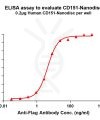
Biotinylated Human CD151 full length protein-synthetic nanodisc
SKU: FLP100071B Target: CD151 Tag: C-Flag&Avi Tag
Expression Host: HEK293
Price: 10 μg $990.00 ; 50 μg $4840.00 ; 100 μg $8800.00
Full Length Transmembrane Proteins
SKU: FLP100071 Target: CD151 Tag: C-Flag Tag
Expression Host: HEK293
Price: 10 μg $900.00 ; 50 μg $4400.00 ; 100 μg $8000.00
Full Length Transmembrane Proteins
SKU: FLP120071 Target: CD151 Tag: C-Flag&Strep Tag
Expression Host: HEK293
Price: 10 μg $810.00 ; 50 μg $3960.00 ; 100 μg $7200.00