Introduction

Ion channels are important multi-pass transmembrane proteins that regulate the transport of ions such as Na⁺, K⁺, Ca²⁺, and Cl⁻ across cell membranes. They play key roles in neuronal signaling, cardiac rhythm, pain sensation, immune regulation, epithelial transport, tumor progression, and cellular signal transduction. Major ion channel families include ligand-gated ion channels, voltage-gated ion channels, TRP channels, P2X receptors, ASICs, GABA_A receptors, NMDA receptors, NaV, CaV, KV, CFTR, ClC, ENaC, and Aquaporins.

In drug discovery and membrane protein research, ion channels are important targets for small-molecule screening and are increasingly attracting attention in antibody and immunotherapy development. Due to their complex structures and strong dependence on lipid membrane environments, high-quality ion channel proteins, antibodies, and stable cell lines are valuable tools for target validation, antibody discovery, SPR binding analysis, functional assays, and structural studies.

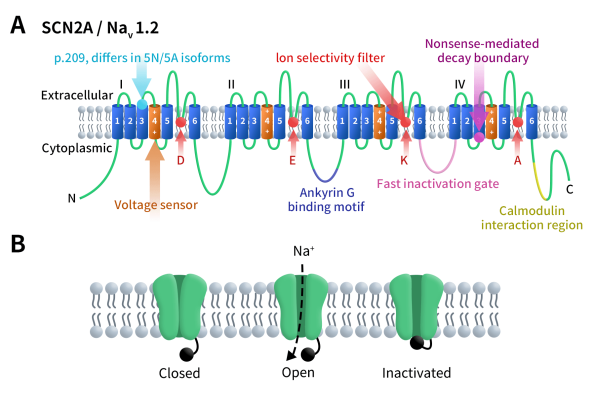
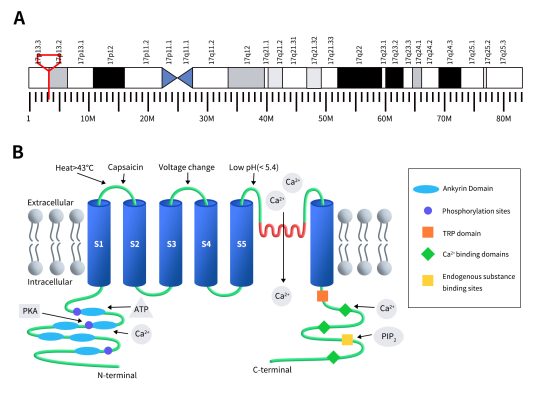
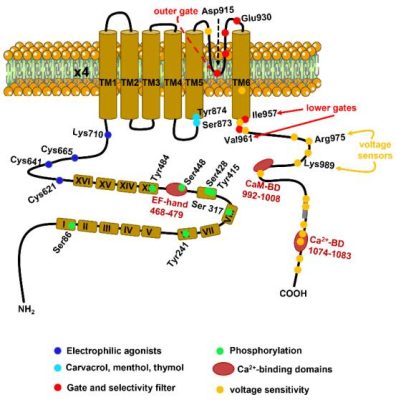
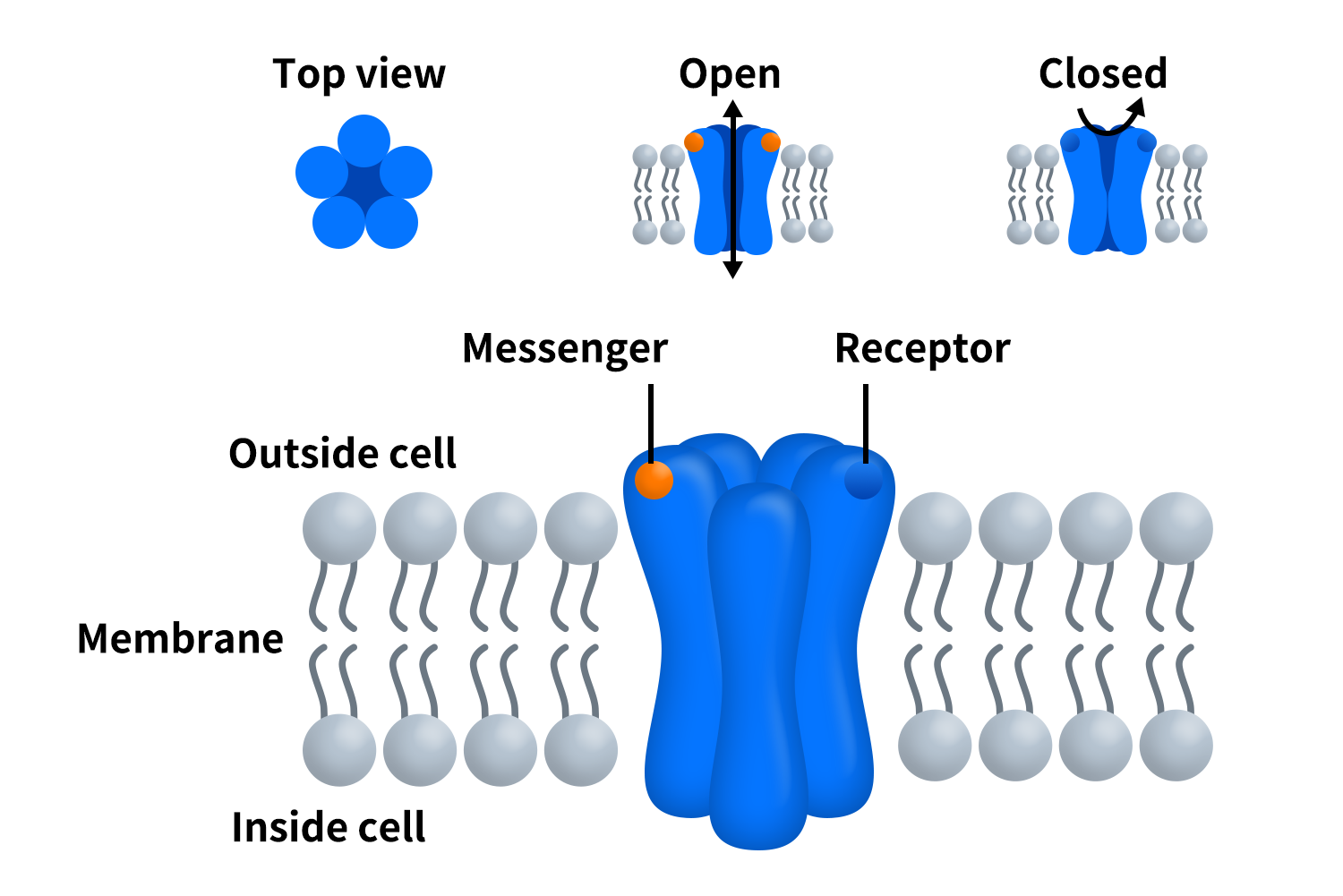
the structure of ion channel

The strucutre of ion channel

Popular Ion Channel Targets

To help researchers quickly identify ion channel-related targets by research area, DIMA BIOTECH categorizes popular ion channel targets based on drug discovery trends and disease research fields, including pain and neuroscience, cardiovascular research and drug safety, immunology and inflammation, oncology, epithelial transport, and metabolic diseases.

Pain, cough, epilepsy, neurodegenerative diseases, and sensory nerve signaling are major areas of ion channel research. Targets such as TRP channels, NaV sodium channels, ASICs, P2X receptors, and neurotransmitter-gated ion channels play important roles in neuronal excitability, pain perception, and synaptic transmission, making them key targets in analgesic drug discovery and neuroscience research.

TRPV1

  • Alias: Capsaicin receptor, Vanilloid receptor 1
  • Indication: Inflammatory pain; Neuropathic pain
Explore the blog of TRPV1

TRPA1

  • Alias: Transient receptor potential ankyrin 1
  • Indication: Chronic cough; Inflammatory pain
Explore the blog of TRPA1

TRPM8

  • Alias: Cold and menthol receptor 1
  • Indication: Migraine; Cold pain

SCN9A / NaV1.7

  • Alias: Voltage-gated sodium channel NaV1.7
  • Indication: Chronic pain; Inherited pain disorders

SCN10A / NaV1.8

  • Alias: Voltage-gated sodium channel NaV1.8
  • Indication: Peripheral neuropathic pain; Inflammatory pain

SCN11A / NaV1.9

  • Alias: Voltage-gated sodium channel NaV1.9
  • Indication: Chronic pain; Visceral pain

P2RX3 / P2X3

  • Alias: P2X purinoceptor 3
  • Indication: Chronic cough; Neuropathic pain

ASIC3

  • Alias: Acid-sensing ion channel 3
  • Indication: Inflammatory pain; Musculoskeletal pain

Cardiac action potentials, heart rhythm regulation, and cardiac safety evaluation of drug candidates are highly dependent on ion channel function. Targets including hERG, NaV1.5, CaV1.2, and KCNQ1 are widely used in arrhythmia studies, QT prolongation risk assessment, and cardiovascular drug screening.

KCNH2 / hERG

  • Alias: Human ether-à-go-go-related gene potassium channel
  • Indication: QT prolongation; Cardiac arrhythmia

KCNE1

  • Alias: Potassium voltage-gated channel subfamily E member 1
  • Indication: Long QT syndrome; Cardiac arrhythmia

SCN5A / NaV1.5

  • Alias: Cardiac voltage-gated sodium channel NaV1.5
  • Indication: Brugada syndrome; Cardiac arrhythmia

CACNA1C / CaV1.2

  • Alias: L-type voltage-gated calcium channel CaV1.2
  • Indication: Hypertension; Cardiac arrhythmia

HCN4

  • Alias: Hyperpolarization-activated cyclic nucleotide-gated channel 4
  • Indication: Sinus node dysfunction; Bradycardia

TRPM4

  • Alias: Calcium-activated non-selective cation channel TRPM4
  • Indication: Cardiac conduction block; Cardiac arrhythmia

Ion channels also play important roles in inflammatory signaling, immune cell activation, oxidative stress, tumor proliferation, migration, and cellular metabolism.

P2RX7 / P2X7

  • Alias: P2X purinoceptor 7
  • Indication: Inflammatory diseases; Tumor immunology

TRPM2

  • Alias: Oxidative stress-sensitive cation channel TRPM2
  • Indication: Neuroinflammation; Metabolic inflammation

TRPV6

  • Alias: Calcium-selective TRP channel TRPV6
  • Indication: Prostate cancer; Breast cancer

TRPC6

  • Alias: Transient receptor potential canonical channel 6
  • Indication: Glioma; Renal cancer

TRPM7

  • Alias: Channel-kinase TRPM7
  • Indication: Breast cancer; Pancreatic cancer

VDAC1

  • Alias: Voltage-dependent anion channel 1
  • Indication: Cancer metabolism; Apoptosis research

Epithelial ion transport channels are involved in water and salt balance, mucus secretion, barrier function, and ion homeostasis in the lung, intestine, kidney, pancreas, and exocrine tissues. Targets such as ENaC and Aquaporins are widely studied in cystic fibrosis, pulmonary diseases, intestinal secretion, and renal transport research.

SCNN1A / ENaC α

  • Alias: Epithelial sodium channel alpha subunit
  • Indication: Pulmonary diseases; Abnormal sodium absorption

SCNN1B / ENaC β

  • Alias: Epithelial sodium channel beta subunit
  • Indication: Pulmonary diseases; Renal salt and water balance

SCNN1G / ENaC γ

  • Alias: Epithelial sodium channel gamma subunit
  • Indication: Hypertension; Renal salt and water balance

AQP1

  • Alias: Aquaporin 1
  • Indication: Renal water transport; Pulmonary edema

AQP2

  • Alias: Aquaporin 2
  • Indication: Nephrogenic diabetes insipidus; Kidney diseases

AQP4

  • Alias: Aquaporin 4
  • Indication: Neuromyelitis optica; Cerebral edema

AQP5

  • Alias: Aquaporin 5
  • Indication: Pulmonary fluid transport; Exocrine gland function

AQP7

  • Alias: Aquaporin 7
  • Indication: Obesity; Type 2 diabetes

Products

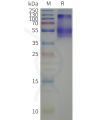
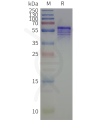
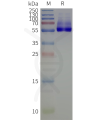
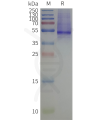
Ion channels are complex multi-pass transmembrane proteins whose native structures rely heavily on lipid membrane environments, making them challenging targets for recombinant expression and antibody discovery. Leveraging its proprietary membrane protein platform, DIMA BIOTECH has developed a range of full-length Nanodisc membrane proteins covering popular targets such as GPCRs and ion channels. These proteins preserve native-like conformations and epitopes, supporting antibody discovery, SPR/BLI binding analysis, and structural studies.

                                *Search by gene name, alias, UniProt ID, or product SKU. Can’t find what you need? Contact us for custom development.

SKU:  FLP120501     Target:  KCNH2     Tag:  C-Flag&Strep Tag

Expression Host:  HEK293

Price: 10 μg $810.00 ; 50 μg $3960.00 ; 100 μg $7200.00

SKU:  FLP120128A     Target:  TRPV1     Tag:  N-MBP Tag, C-Flag&Strep Tag

Expression Host:  HEK293

Price: 10 μg $900.00 ; 50 μg $4400.00 ; 100 μg $8000.00

SKU:  FLP120759     Target:  TRPC6     Tag:  C-Flag&Strep Tag

Expression Host:  HEK293

Price: 10 μg $810.00 ; 50 μg $3960.00 ; 100 μg $7200.00

SKU:  FLP120128     Target:  TRPV1     Tag:  C-Flag&Strep Tag

Expression Host:  HEK293

Price: 10 μg $810.00 ; 50 μg $3960.00 ; 100 μg $7200.00

SKU:  FLP100726     Target:  SCN5A     Tag:  C-Flag Tag

Expression Host:  HEK293

Price: 10 μg $900.00 ; 50 μg $4400.00 ; 100 μg $8000.00

SKU:  FLP100616     Target:  CACNG1     Tag:  C-Flag Tag

Expression Host:  HEK293

Price: 10 μg $900.00 ; 50 μg $4400.00 ; 100 μg $8000.00

SKU:  FLP100159     Target:  TRPV6     Tag:  C-Flag Tag

Expression Host:  HEK293

Price: 10 μg $900.00 ; 50 μg $4400.00 ; 100 μg $8000.00

SKU:  FLP200087     Target:  MLC1     Tag:  C-Flag Tag

Expression Host:  HEK293

Price: 50 μg $1200.00 ; 100 μg $1600.00

Explore all nanodisc-based proteins!

Hot Topics

SCN2A: Molecular Mechanisms, NaV1.2 Function, and Precision Therapeutic Strategies for Early-Onset Epilepsy

In April 2025, a clinical case report in Nature Medicine offered groundbreaking evidence for precision therapeutics targeting SCN2A. The study...

TRPV1: An Important Target for Pain Treatment

Do you remember the temperature and touch receptor TRPV1 that made American scientists David Julius and Ardem Patapoutian accessible to...

TRPA1, what a therapeutic target for pain!

The transient receptor potential ankyrin 1 (TRPA1) is a non-selective cation channel that allows the passage of Ca2+, thereby increasing...

Leave a Message For Service


    Please prove you are human by selecting the truck.